

Battery vs. Gas Lawn Mowers: Which One Makes More Sense for Your Yard?
LAWN CARE EQUIPMENT
7/16/20266 min read
Affiliate Disclosure: This post may contain affiliate links. As an Amazon Associate, I earn from qualifying purchases.
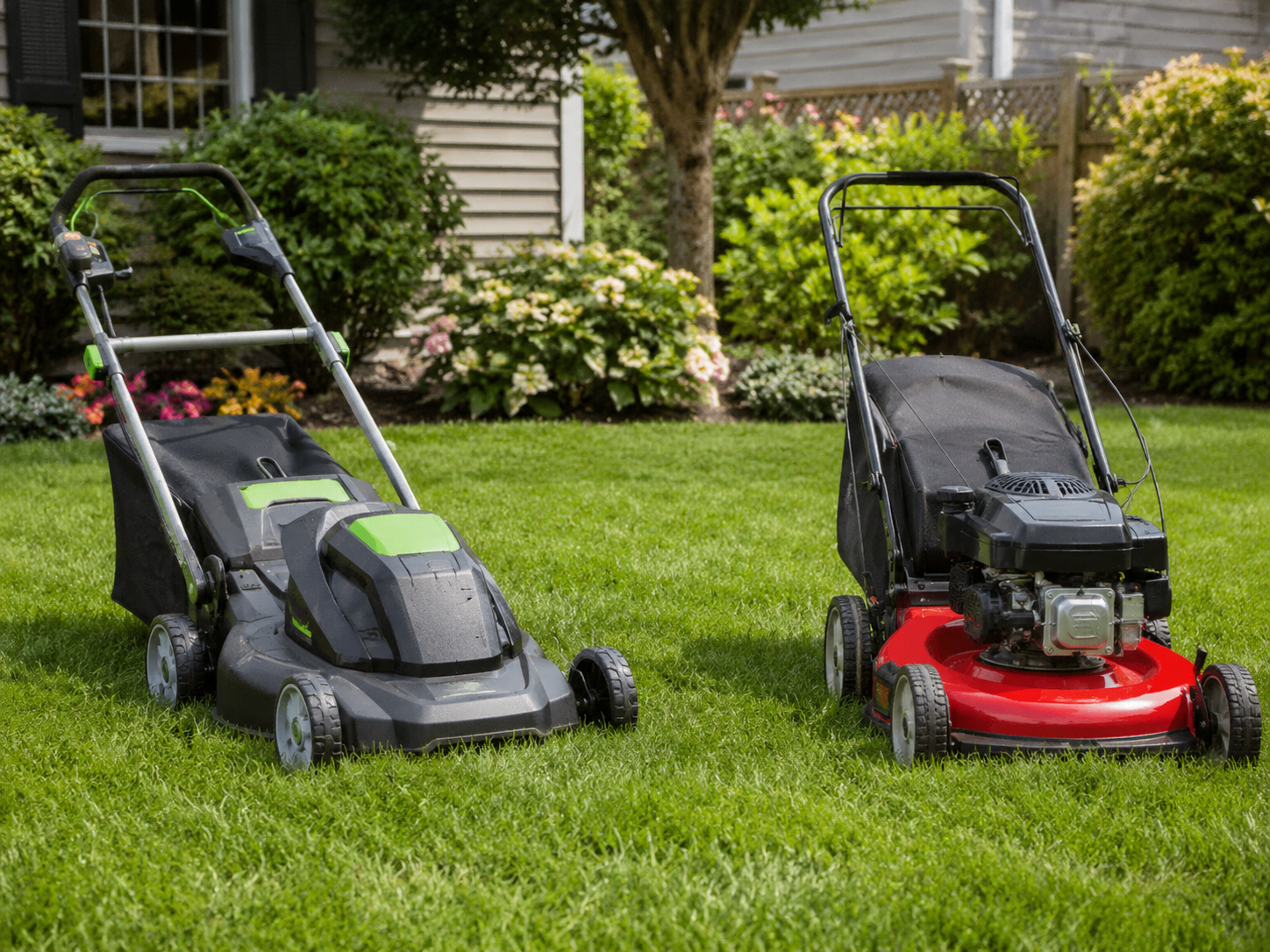
Battery lawn mowers have changed a lot in recent years. They are no longer just light-duty machines for tiny patches of grass. Many modern battery mowers can handle regular suburban lawns, offer self-propelled drive, fold for storage, and eliminate many of the maintenance jobs that come with gas engines.
But that does not mean gas mowers are obsolete.
The better choice depends on your yard size, grass conditions, mowing habits, storage space, and how much maintenance you are willing to do. A mower that works perfectly for a small weekly-maintained lawn may be frustrating on a large, uneven yard with thick spring growth.
Here is a practical way to compare battery and gas lawn mowers before buying.
The Short Answer
For many homeowners with small to medium lawns, a good battery mower now makes a lot of sense. It is quieter, easier to start, cleaner to store, and much lower maintenance.
For larger properties, thick grass, wet spring growth, or long mowing sessions, a gas mower may still be the more dependable choice.
The real question is not simply:
Which one is better?
The better question is:
Which mower fits the way you actually mow?

Battery Lawn Mowers: Where They Shine
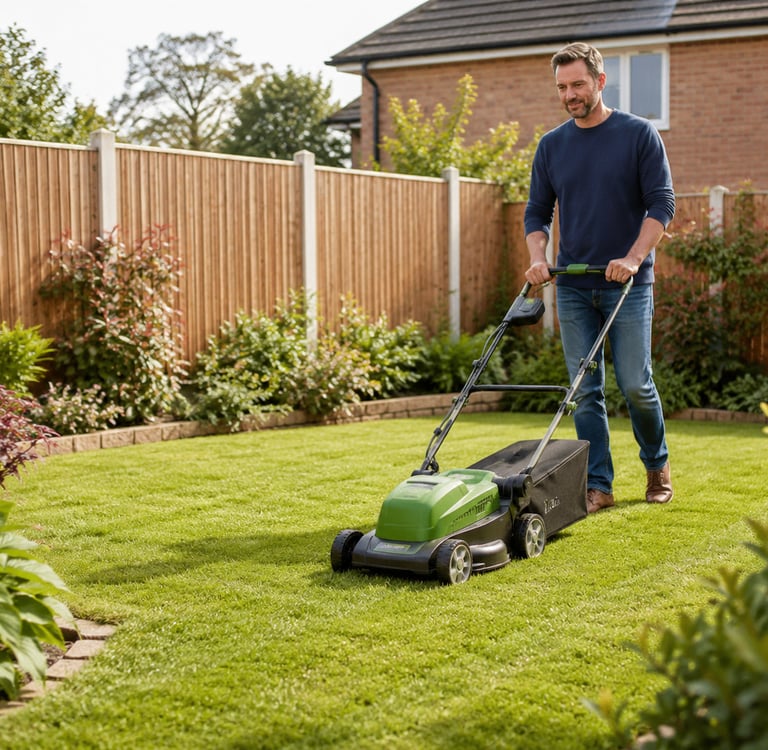
Battery mowers are excellent for homeowners who want simple, low-maintenance lawn care.
There is no gas to store, no oil changes, no spark plugs, and no carburetor problems after winter. You charge the battery, push a button, and start mowing.
That makes battery mowers especially attractive for people who mow regularly and do not want to deal with engine maintenance.
Battery mowers usually work best for:
Small to medium lawns
Suburban yards
Regular weekly mowing
Homeowners who want low maintenance
People who value quiet operation
Garages or sheds where fuel storage is inconvenient
Gardeners already using battery tools from the same brand
If you already own a battery trimmer, blower, or hedge trimmer, staying in the same battery platform can make sense. One battery system for several lawn and garden tools can simplify your whole setup.
Where Battery Mowers Can Struggle
Battery mowers are convenient, but runtime still matters.
If your lawn takes longer than one battery can handle, you may need a second battery or a mower with higher capacity. That adds cost.
Tall, wet, or very dense grass can also drain batteries faster. The mower may work harder, reduce runtime, or leave a less even cut if you are pushing it beyond its comfort zone.
Battery mowers can struggle with:
Large lawns
Very thick grass
Wet grass
Infrequent mowing
Heavy spring growth
Long mowing sessions
Users who forget to charge batteries
A battery mower works best when you mow before the grass gets out of control. If you often wait until the lawn is too tall, gas may still feel stronger and more forgiving.
Gas Lawn Mowers: Why They Still Matter
Gas mowers are proven, powerful, and familiar.
They usually offer strong cutting performance, long runtime, and quick refueling. If you run out of fuel, you refill the tank and keep going. You do not wait for a battery to recharge.
This makes gas mowers useful for larger yards or tougher mowing conditions.
Gas mowers usually work best for:
Larger lawns
Thick or fast-growing grass
Rougher areas
Long mowing sessions
People who mow less frequently
Homeowners who want maximum cutting power
Properties where battery runtime would be a problem
A good gas mower can handle abuse that may frustrate a smaller battery machine. For some properties, that still matters.
The Maintenance Difference
This is where battery mowers have a clear advantage.
A gas mower may require oil changes, spark plug replacement, air filter service, fuel stabilizer, carburetor cleaning, and winter storage preparation. None of those jobs are impossible, but many homeowners simply do not want to deal with them.
A battery mower still needs care, but it is simpler.
Keep the blade sharp
Clean grass buildup
Store batteries properly
Charge batteries before mowing
Avoid leaving batteries in extreme heat or cold
For a homeowner who wants a mower that simply starts without drama, battery is very appealing.
Cost: Upfront vs. Long Term
Gas mowers are often cheaper to buy upfront, especially basic push models.
Battery mowers can cost more at the start, especially if they include larger batteries or self-propelled drive. Replacement batteries can also be expensive.
However, battery mowers may cost less over time because there is no gasoline, oil, spark plugs, or engine service.
So do not compare only the sticker price. Compare the total cost of ownership.
Before buying, ask yourself:
Will I need a second battery?
Do I already own compatible batteries?
How much gas would I use each season?
Do I service my own equipment?
Do I want one battery platform for mower, trimmer, and blower?
That gives you a much more realistic answer.
Cutting Quality: The Blade Still Matters
Whether you choose battery or gas, cutting quality depends heavily on the blade.
A dull blade tears grass instead of cutting it cleanly. Torn grass tips can turn brown and make the lawn look unhealthy even if the mower itself is good.
For a better lawn, sharpen or replace the blade regularly.
Also remember the one-third rule: avoid cutting off more than one-third of the grass blade at one time. Removing too much at once stresses the lawn and can make it more vulnerable during heat and dry weather.
This is one of the most important mowing rules, regardless of mower type.
Should You Bag Grass Clippings?
In most regular mowing situations, you do not need to bag grass clippings.
Short clippings can break down and return nutrients to the soil. This can support a healthier lawn and reduce the amount of yard waste you need to remove.
But there are exceptions.
Bag or remove clumps when:
The grass is very tall
The lawn is wet
Clippings are sitting in thick piles
The lawn shows signs of disease
The cut looks messy and smothers the grass
The goal is not to leave heavy piles behind. The goal is to let small, fine clippings disappear back into the lawn.

Choose Based on Your Real Lawn
Here is the simplest way to decide.
Choose a battery mower if:
Your lawn is small to medium
You mow regularly
You want less maintenance
You prefer quieter equipment
You have limited storage
You already use battery garden tools
You want an easier start-and-go mowing routine
Choose a gas mower if:
Your lawn is large
Your grass gets thick or tall
You mow less often
You need long runtime
You do not mind engine maintenance
You want maximum cutting power
You often deal with tougher mowing conditions
Battery mowers are not just for tiny lawns anymore. But gas still has an advantage when the job is bigger, rougher, or less predictable.
What I Would Choose
For a typical homeowner with a small or medium backyard, I would strongly consider a battery mower today.
The convenience is hard to ignore. Quiet operation, push-button start, low maintenance, and easy storage make mowing less annoying.
But if your grass grows fast, your yard is large, or you often mow when the grass is tall, a gas mower may still be the more practical and reliable option.
The best mower is not the newest one or the loudest one. It is the one that fits your real mowing routine.

Final Thoughts
Battery mowers are getting better, and for many homeowners they are now a serious alternative to gas. They are cleaner to use, quieter, easier to maintain, and practical for many regular lawns.
Gas mowers still have a place, especially for larger yards and tougher conditions.
Before buying, think about your lawn size, how often you mow, how thick your grass gets, whether you want to maintain an engine, and how much runtime you really need.
A smart mower choice is not about following a trend. It is about choosing the tool that makes lawn care easier for your own yard.
Recommended Battery Lawn Mower for Small and Medium Gardens
If you are leaning toward a battery mower, I would choose something practical, easy to store, and simple to use rather than going straight for the biggest machine available.
For many home gardeners, a compact cordless mower makes more sense than a heavy petrol mower or an oversized battery model. It is easier to handle, quieter to use, and much more convenient for regular lawn care around smaller garden spaces.
The Husqvarna Aspire LC34-P4A is a good fit for this type of garden. It is designed for easy mowing and compact storage, with a lightweight body, folding handle, central cutting height adjustment, and an 18V battery platform that can also work with other compatible garden tools.


© My Heavenly Garden 2026. All rights reserved.
Follow me:
Affiliate Disclosure
This website contains affiliate links. I may earn a commission if you make a purchase through these links, at no extra cost to you.