
Solar Garden Lights: Where They Work Best and Where They Don’t
Learn where solar garden lights work best, where they struggle, and how to use them for paths, patios, flower beds, fences, and backyard atmosphere.
GARDEN LIGHTING
7/6/20266 min read
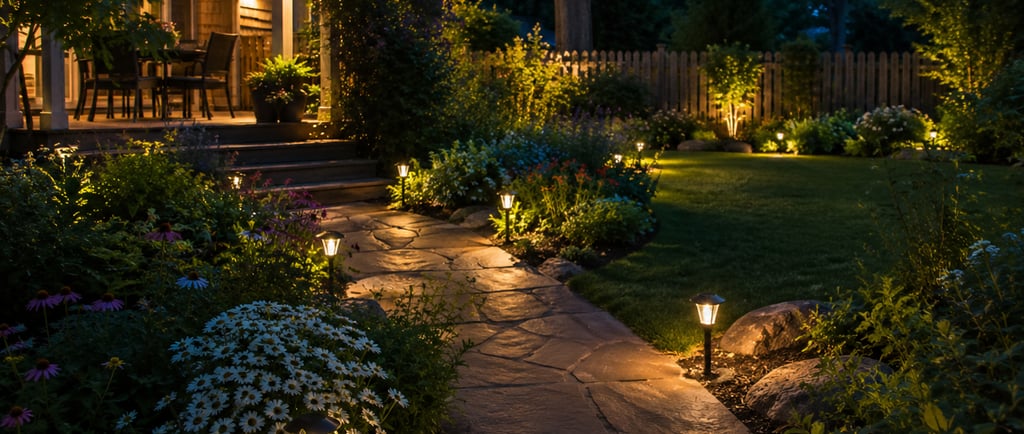
Solar garden lights are one of the easiest ways to upgrade an outdoor space. They do not require complicated wiring, they are simple to install, and they can instantly make a garden feel warmer, safer, and more inviting after sunset.
But solar lights are not perfect for every situation.
Some gardeners buy a set of solar lights, place them anywhere in the yard, and feel disappointed when they are dim, inconsistent, or stop working after cloudy weather. The problem is not always the lights themselves. Often, it comes down to choosing the wrong type of light for the wrong location.
Used correctly, solar garden lights can be a beautiful and practical addition to a backyard. The key is knowing where they work best — and where a different lighting option may be smarter.
Why Solar Garden Lights Are So Popular
Solar lights are popular because they are simple.
Most models include a small solar panel, a rechargeable battery, and an LED light. During the day, the panel collects sunlight and charges the battery. At night, the stored energy powers the light.
That makes solar lighting especially useful for gardeners who want a quick improvement without digging trenches, running cables, or hiring an electrician.
Solar lights are commonly used for:
Garden paths
Walkways
Flower beds
Patio edges
Decks
Fence lines
Driveways
Small water features
Decorative garden accents
They are also easy to move. If a light does not look right in one area, you can usually reposition it without much effort.
Where Solar Garden Lights Work Best
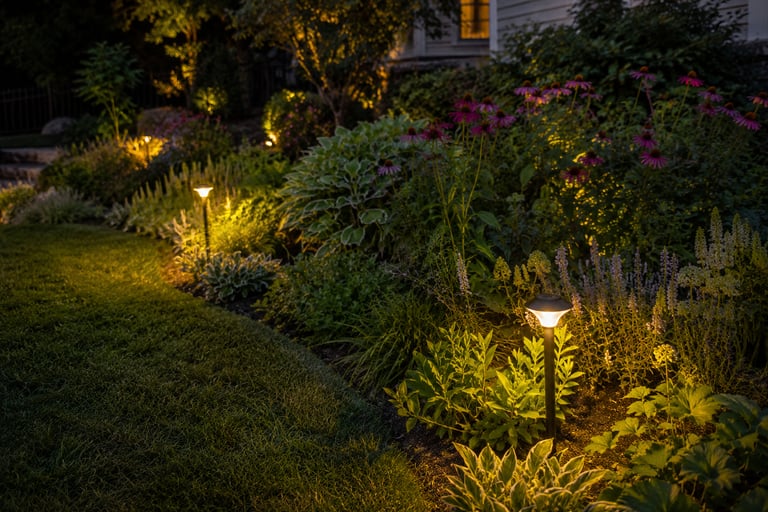
Solar garden lights work best in areas that receive several hours of direct sunlight during the day.
A sunny path, open flower bed, patio edge, or south-facing garden area is usually a good place to start. The more sunlight the panel receives, the better the light will usually perform at night.
They are especially effective for low-level decorative lighting. Think of them as mood and guidance lights rather than powerful floodlights.
Garden Pathways
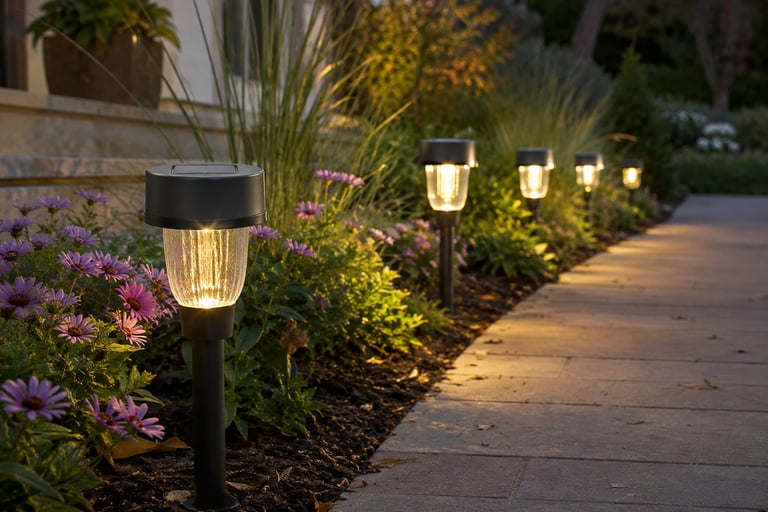
Path lights are one of the most common uses for solar garden lighting.
They help define walkways and make the garden easier to navigate after dark. A row of warm, low-level lights along a path can also create a welcoming look without overwhelming the space.
For the best effect, avoid placing lights too close together. If every few inches are lit, the path can look more like a runway than a garden. A softer spacing usually feels more natural.
Flower Beds and Borders
Solar lights can add depth and interest to flower beds after sunset.
Small stake lights placed near ornamental grasses, perennials, shrubs, or garden edges can highlight texture and shape. This is especially effective with plants that have interesting foliage, seed heads, or movement in the evening breeze.
Warm white lights usually look more natural than harsh cool-white lights. In a garden, the goal is often atmosphere, not brightness.
Patio and Seating Areas
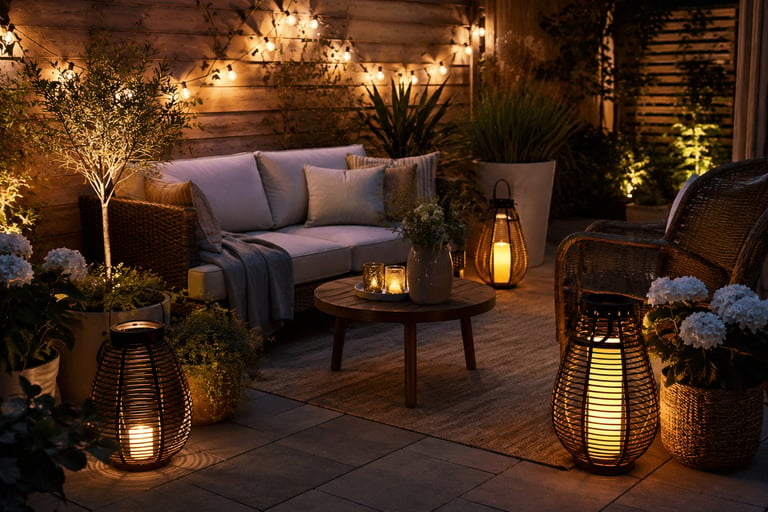
Solar string lights and lantern-style lights can make patios and seating areas feel more comfortable in the evening.
This type of lighting is not meant for serious task lighting, but it can create a relaxed atmosphere for outdoor meals, quiet evenings, or casual gatherings.
String lights work well over pergolas, fences, railings, small trees, and outdoor seating zones. Just make sure the solar panel is placed where it can actually collect enough sunlight during the day.
Fence Lines and Garden Walls
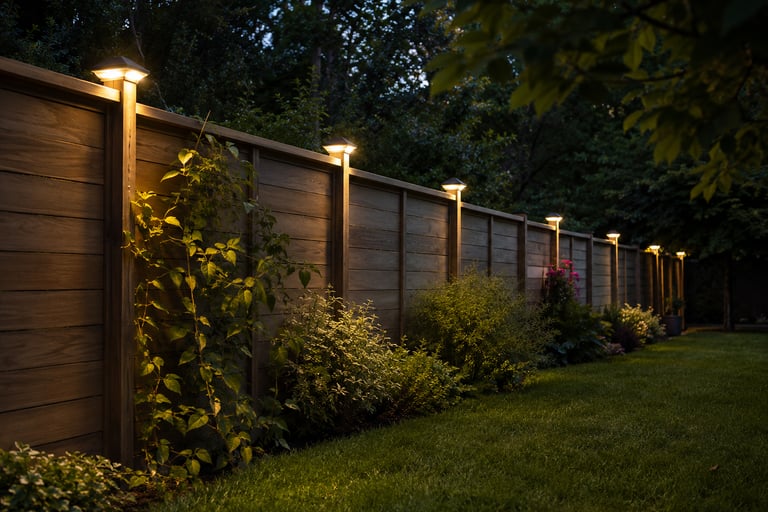
Fence lights, wall-mounted solar lights, and post-cap lights can help define the edges of a backyard.
They are useful when you want subtle lighting around the perimeter without installing hardwired fixtures. This can make a garden feel more finished and intentional at night.
Solar fence lights can also help highlight climbing plants, trellises, gates, or entry points.
Around Water Features
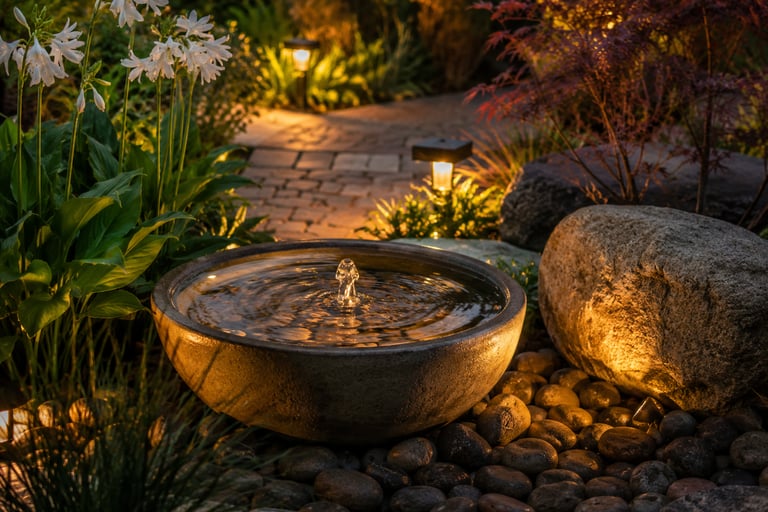
Solar lights can look beautiful near ponds, fountains, and water bowls.
Even a small amount of light reflected on moving water can make a garden feel more peaceful and atmospheric. Low-level lighting near a water feature can also help it remain visible and enjoyable after sunset.
However, avoid placing lights where they shine directly into the eyes. The best water feature lighting is usually subtle and angled carefully.
Where Solar Lights Don’t Work Well
Solar lights are convenient, but they are not the best choice everywhere.
They may struggle in locations with heavy shade, under dense trees, along north-facing walls, or in areas that receive only a small amount of sunlight. They can also perform poorly during long stretches of cloudy weather.
If you need strong, reliable light for security, steps, driveways, or heavily used areas, solar may not always be enough.
Deep Shade
Solar lights need sunlight. That sounds obvious, but it is one of the most common mistakes.
A beautiful shady garden corner may seem like the perfect place for a soft evening glow, but if the solar panel does not receive enough sunlight during the day, the light will be weak or inconsistent at night.
For shaded areas, consider wired low-voltage lighting or choose solar lights with a separate panel that can be placed in a sunnier spot.
Security Lighting
Some solar motion lights can work well for light security use, but not every solar fixture is strong enough for this job.
If you need dependable brightness near a driveway, garage, side yard, or entrance, check the light output carefully. Decorative solar lights are not designed to replace proper security lighting.
For safety-focused areas, reliability matters more than appearance.
Steps and High-Traffic Areas
Steps, uneven paths, and frequently used walkways need consistent lighting.
If a solar light becomes dim after cloudy weather, that could create a safety issue. For stairs, decks, and main entry paths, choose higher-quality fixtures or consider a more reliable lighting system.
Solar step lights can be useful, but they should be selected carefully.
Areas with Too Much Artificial Light
Solar lights usually turn on automatically when it gets dark.
If they are placed near porch lights, streetlights, or bright outdoor fixtures, the sensor may not activate properly. This can make the light behave unpredictably.
Before installing solar lights, pay attention to nearby light sources.
How to Choose Better Solar Garden Lights
Not all solar lights are the same.
Cheap lights can work for simple decorative use, but better-quality options often provide stronger performance, better weather resistance, and longer life.
When choosing solar garden lights, consider:
How much sun the location receives
Warm white vs. cool white light
Battery quality
Weather resistance
Brightness level
Replaceable batteries
Build material
Whether the solar panel is built-in or separate
The purpose of the light
For garden atmosphere, warm white is usually the safest choice. For visibility and security, brightness and reliability matter more.
Warm Light Usually Looks Better in a Garden
One of the easiest ways to make garden lighting look more expensive is to choose a warm tone.
Cool white lights can feel harsh outdoors, especially around plants and seating areas. Warm white lighting feels softer and more natural. It creates a calm glow rather than a sharp spotlight effect.
For most gardens, subtle lighting is better than excessive brightness.
Layer Your Garden Lighting
A beautiful nighttime garden usually uses more than one type of light.
Instead of relying on one bright fixture, try layering different lights:
Path lights for movement
String lights for atmosphere
Spotlights for trees or shrubs
Lanterns for seating areas
Wall lights for structure
Small accent lights near water features
Layered lighting makes the garden feel more intentional and comfortable. It also allows you to highlight the best parts of your outdoor space.
Final Thoughts
Solar garden lights can be a simple and affordable way to improve your backyard, but they work best when used in the right places.
Use them where they receive plenty of sunlight. Choose warm, subtle lighting for atmosphere. Place them along paths, near flower beds, around patios, beside fences, or close to water features.
But do not expect every solar light to perform like a hardwired fixture. For deep shade, security lighting, steps, and high-traffic areas, choose carefully and prioritize reliability.
The best garden lighting does not simply make a space brighter. It makes the garden feel more welcoming, more beautiful, and more enjoyable after the sun goes down.
© My Heavenly Garden 2026. All rights reserved.
Follow me:
Affiliate Disclosure
This website contains affiliate links. I may earn a commission if you make a purchase through these links, at no extra cost to you.